Many people today step into witchcraft without fully understanding what they are dealing with. Some come out of curiosity, some out of pain, some out of a desire for power, and some because of romantic ideas about “being magical.”
But witchcraft is neither aesthetics nor a game.
It is an interaction with forces that:
- have their own rules,
- their own boundaries,
- their own consequences,
- their own karmic knots,
- their own demands,
- and their own price.
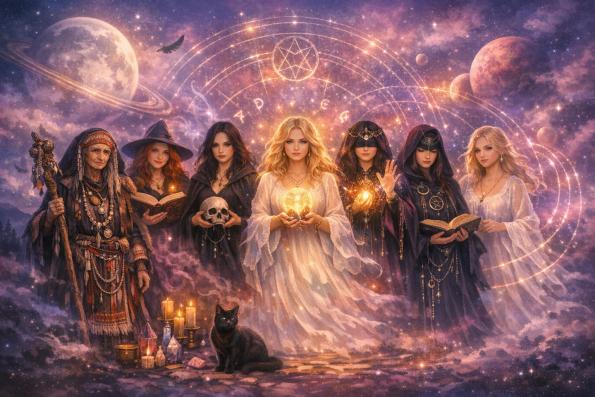
To avoid falling into illusions, it is important to understand where your gift comes from, what your path is, what forces stand behind you, and—most importantly—where this path is taking you. For this purpose, we distinguish seven types of witches, each with its own sources of power, limitations, risks, and tasks. Some of the names are descriptive rather than commonly used in society.
1. The Ancestral Witch
The gift is passed on only at the moment of a blood relative’s death.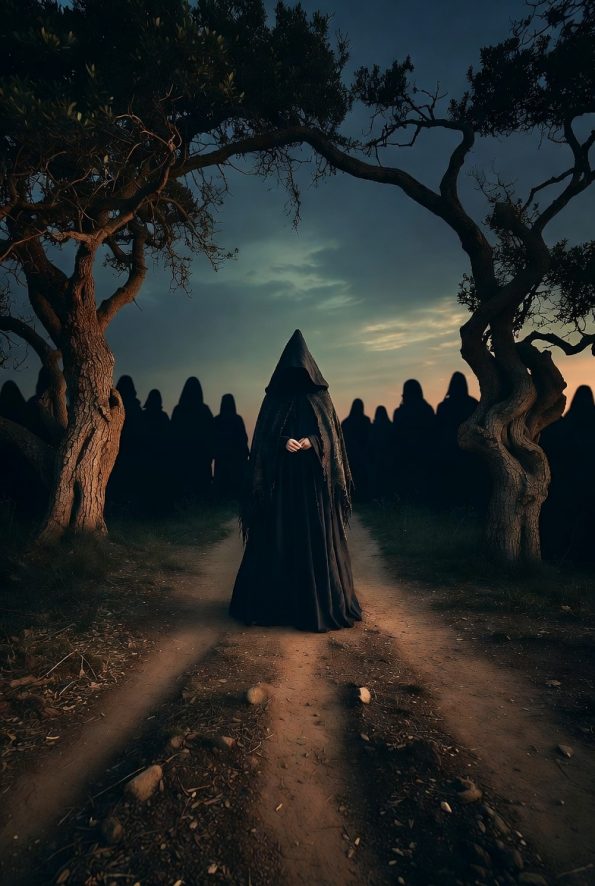
This is the only way to become an ancestral witch.
The transfer usually skips a generation (to a granddaughter) or goes through a side branch (a niece or grand‑niece) who already has a child.
This is karmic predestination.
Source of Power
An ancestral contract made by predecessors—most often with a crossroads spirit, a graveyard spirit, or a restless dead who is stuck between worlds and has not crossed over.
Characteristics
- receives protection — no one can harm her as long as she stays within the boundaries of the ancestral contract
- receives the specific power of her lineage
- has strict limitations (often a specific “type” of magic + prohibition on working with herself or blood relatives)
- cannot step outside the contract
- cannot work with forces not included in the agreement
- cannot make new contracts without the entity’s consent
Path
- determine the karma that brought her into this lineage
- understand what must be worked through and what must be developed through the gift
- decide whether to continue or break the contract
- if breaking it — release the entity and guide it onward (preferably according to the 13 rules)
- if continuing — accept the consequences for herself and her descendants
2. The Witch of a Broken Contract
The power was not passed directly, but the contract still exists.
The spirit demands continuation, “interfering” in the lives of several family members, waiting for someone who will respond and agree to take on the contract.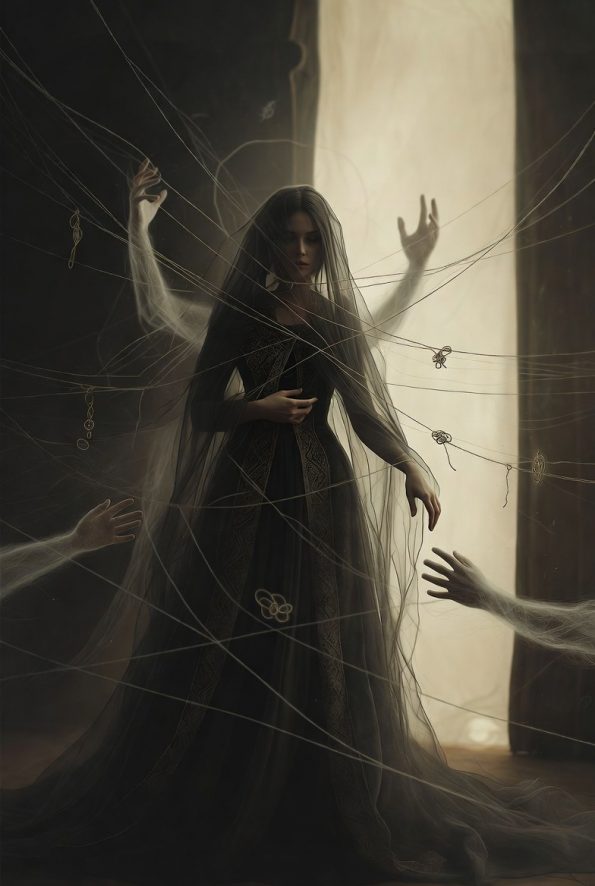
Source of Power
An ancestral agreement that was never closed.
Characteristics
- not an ancestral witch, though she often believes she is
- directly involved in the contract
- consequences fall on the entire lineage
- the spirit chooses her according to karma
Path
- determine why the spirit chose her specifically
- understand the karmic tasks
- find out whether the contract can be passed to another family member
- decide the fate of the agreement
- learn to see consequences for all participants
3. The Book Witch
Magic through knowledge, books, treatises, and practices.
Source of Power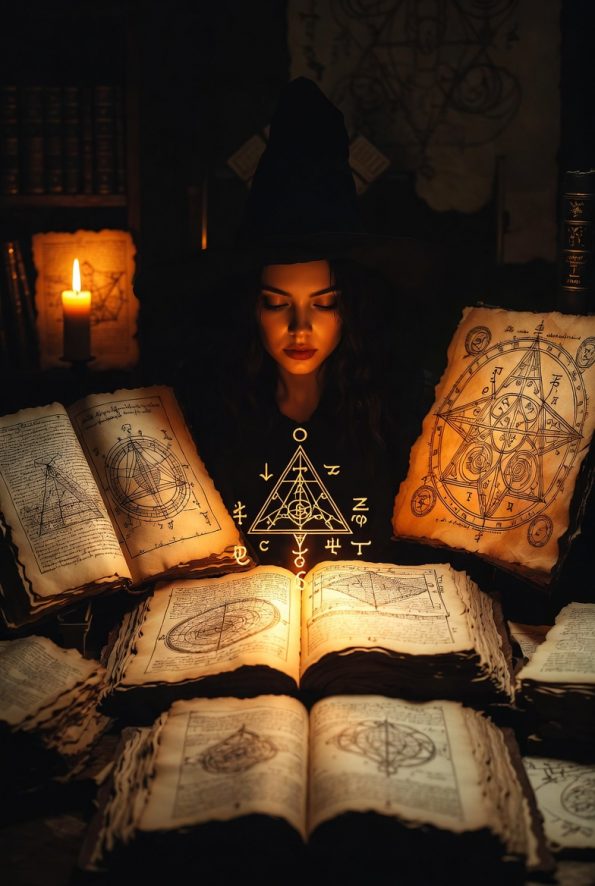
Personal energy invested into ritual work.
Characteristics
- power is not permanent
- every ritual has karmic cost
- consequences affect all participants
- results are not always immediate
Path
- study systems
- understand how rituals actually create energetic knots for all involved, not just how books describe it
- work ethically and responsibly
- strengthen personal power
4. The Self‑Initiated (Awakened) Witch
Magic arises from within: dreams, signs, sudden abilities.
Source of Power
An inner impulse of the unconscious.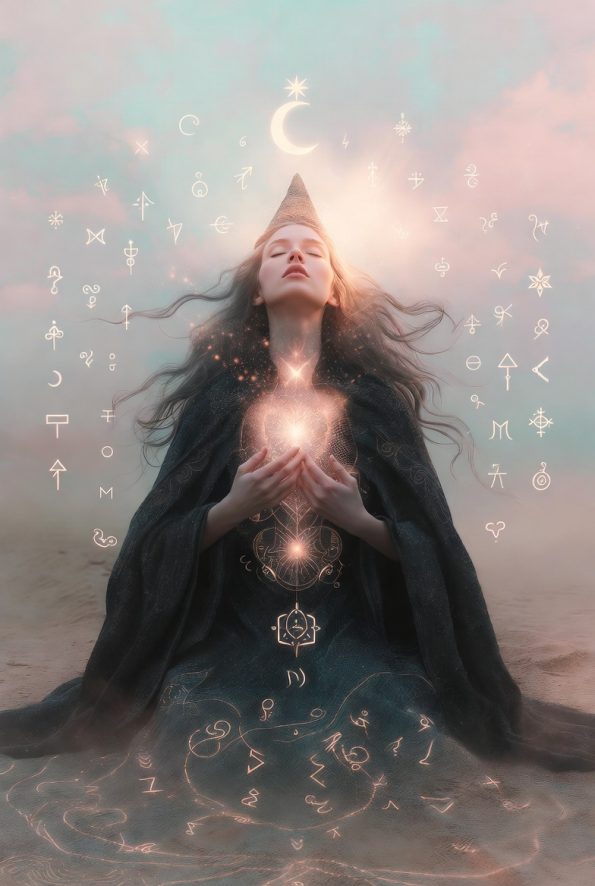
Characteristics
- a lot of romanticism and a sense of “I am special”
- risk of falling into illusions
- communication with peers and mentors is essential
- must learn to interpret symbolic messages
Path
- search for karmic knots that triggered the awakening
- stop romanticizing magic
- learn to see consequences across multiple incarnations
- learn to interpret inner messages
5. The Externally Initiated Witch
Magic comes through a teacher, mentor, coven, or tradition.
Source of Power
Transmission from another person or group.
Sometimes egregorial, which may create the illusion of self‑initiation.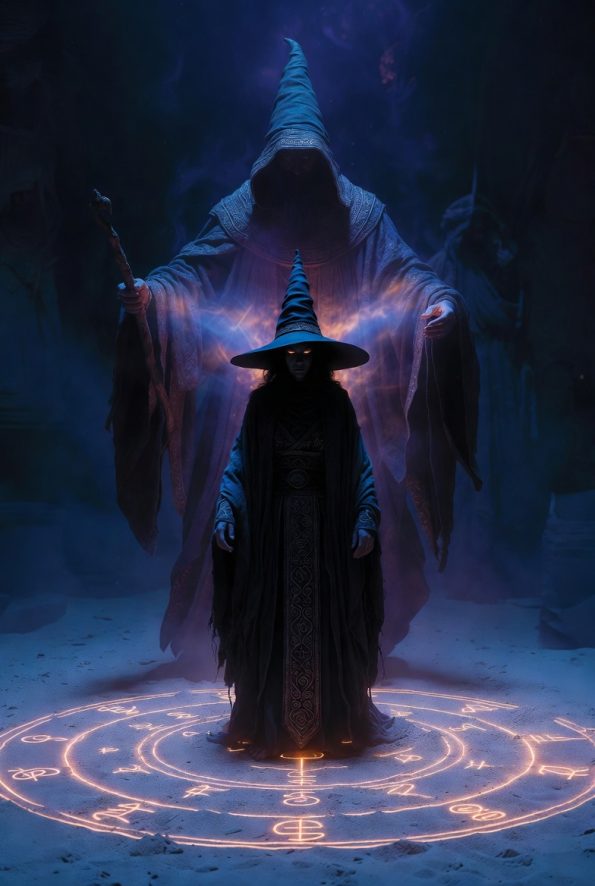
Characteristics
- the initiator may pass on not only power but also debts
- important to check the source and see who stands behind it on subtle levels
- important to recognize one’s projections onto the teacher
Path
- examine karmic knots with the teacher
- examine secondary gains for all parties, including oneself
- understand the causes and consequences of the initiation, including unresolved knots from past lives
- decide whether to remain in the tradition or walk independently
6. The Occult Witch
Source of Power
Work within Thelemic, Hermetic, ceremonial, and post‑traditional magical systems of the 20th century, based on:
- reworked medieval treatises
- systems of Crowley, the Golden Dawn, Thelema, etc.
This is work with trans‑empirical entities, not with spirits of places or the dead.
Characteristics
- works with symbolic, archetypal, trans‑empirical mythological structures
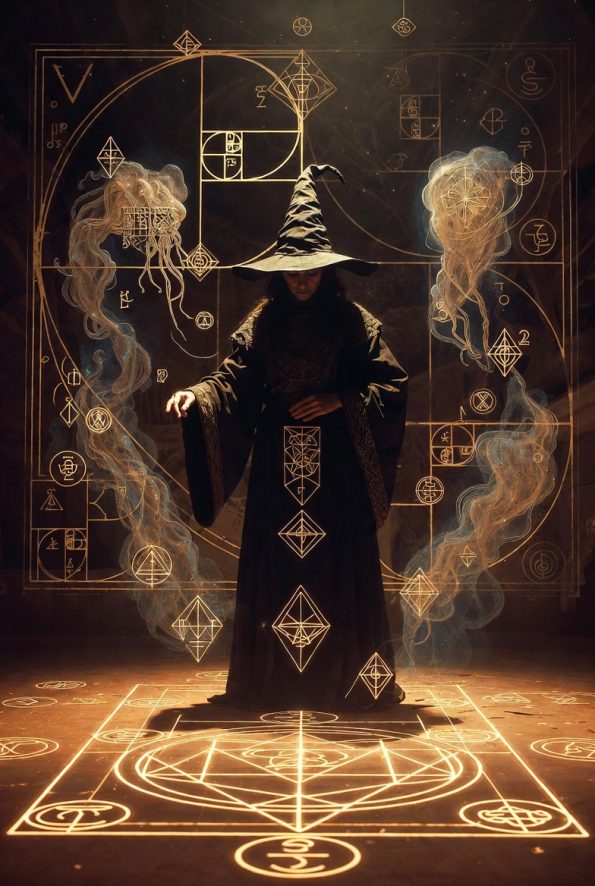
- interacts not with “spirits,” but with mythic levels of consciousness
- magic is systematic, structured, intellectual
- requires discipline, will, and understanding of the paradigm
Path
- study the paradigm she works within
- understand the nature of trans‑empirical entities
- follow safety protocols
- avoid confusing archetypes with real spirits
- avoid projecting ancestral models onto occult systems
7. The Karmic Witch (Witch of Fate, Witch of Incarnation)
This type of witch is not connected to a lineage, a teacher, books, or occult systems.
Her path does not begin in this lifetime—it stretches back through previous incarnations.
A karmic witch enters magic not because she “receives” a gift, but because she carries unfinished knots that require continuation or closure.
This is not awakening (as with the self‑initiated),
not transmission (as with the ancestral),
not training (as with the initiated),
and not a system (as with the occult witch).
It is a return to what has already been.
Source of Power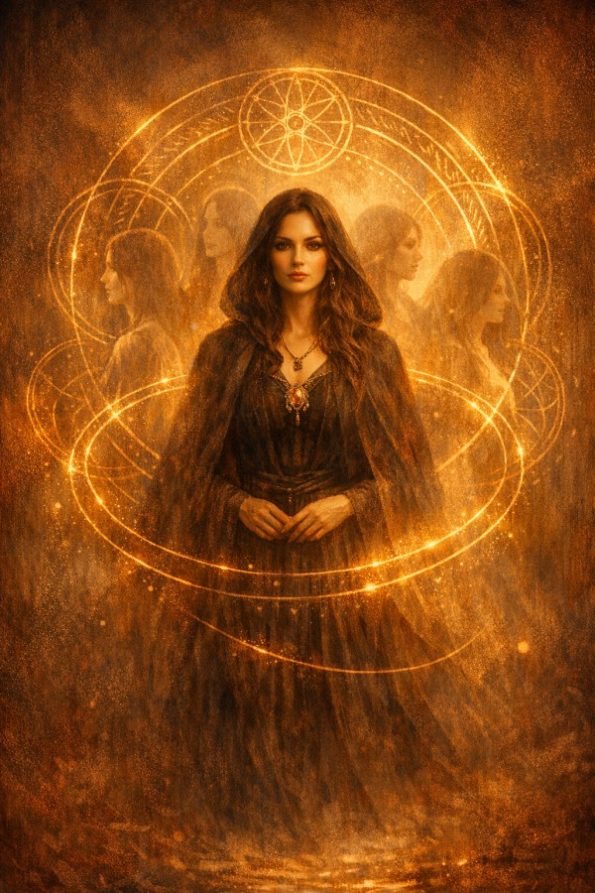
Personal karmic baggage:
- unfinished practices from past lives
- personal magical debts
- unclosed contracts (not ancestral)
- incomplete rituals
- personal connections with entities unrelated to the family
- consequences of past magical actions that require resolution
A karmic witch does not “receive” power—she remembers what she once knew.
Characteristics
- a sense that magic has “always been there”
- attraction to certain practices without explanation
- recurring dreams, symbols, déjà vu
- fears or aversion to magic—also karmic
- the gift is often “heavy” because it is tied to debts
- power may be strong but unstable
- her path is not about gaining power, but about completing fate
A karmic witch is carried not by lineage, spirit, or teacher,
but by her own history of incarnations.
Path
- identify which karmic knots brought her into magic
- understand what must be closed rather than opened
- see which practices are carried over from past lives
- determine which entities are personally connected to her
- understand what must be completed, annulled, or released
- learn to work not for power, but for healing fate
- avoid confusing personal karmic ties with ancestral or egregorial ones
A karmic witch is not about “I am special.”
She is about: I continue what began before, and I finish what remains unfinished.
Conclusion
A witch may begin her path in one system and later move into another, or combine several.
But the starting point will always influence everything that follows, because it determines:
- where the gift came from,
- which forces stand behind you,
- which limitations you carry,
- which karmic knots activate,
- and what consequences each step will bring.
Regardless of your type, it is essential to understand what stands behind your entry into magic on the level of past incarnations.
A karmic knot is not a metaphor—it is a structure that determines:
- why you were born into this family,
- why you are drawn to certain practices,
- why you choose particular teachers,
- why you face specific challenges.
Any magical work leaves a trace:
- direct influence — on you and those involved,
- indirect influence — on your lineage, environment, and future incarnations,
- delayed influence — which may manifest much later but inevitably.
This is why it is advisable to ask yourself whether your work aligns with the 13 rules—the basic principles of safety, responsibility, and purity of intention.
And finally, it is necessary to look honestly at what brought you into magic on the everyday level.
Here we find:
- childhood trauma,
- unprocessed emotions,
- a need for control,
- a search for power where it was lacking,
- attempts to compensate for what was damaged early in life.
This classification of witches is not a theoretical construct or an attempt to invent new labels.
It grew out of years of working with people who came saying, “Something is affecting me,” “I don’t understand what’s happening,” “I feel pulled toward magic and don’t know why.”
When you begin to unravel such cases, it becomes clear that what people call “influence” is often not an external attack, but:
- an unclosed ancestral contract,
- a karmic knot from past incarnations,
- consequences of someone else’s initiation,
- personal childhood trauma,
- or the unconscious trying to return a person to a path they once abandoned.
Through this work, I saw that those whom society casually calls “witches” come into magic through very different doors.
Each path carries its own tasks, limitations, and consequences.
This is how this system was born—as a way to understand:
- where a person’s power comes from,
- why it manifests the way it does,
- which knots lie behind it,
- and where the path is leading.
This structure helps us see magic more broadly—not as a set of techniques, but as an interweaving of karma, lineage, psyche, and the soul’s choices.
ЕжениМакКвин©-2026
What Amazons took into the other world.
Sacred places of Ukraine Goddess.
The pagan temples and sacred places of Lviv, Ukraine.
Прояв архетипічних процесів; чотири стадії трансформації психіки
Двері, що ведуть до саду безсмертя богині Сіванму.
Магические тропы Буши. Места силы Украины.
EOLAS AN T-SNAITHNEAN; потрійни нітки ірландськой магії.